
Tooth Extractions – Reynoldsburg, OH
Protecting Oral Health by Removing Unsalvageable Teeth
If your tooth is only slightly damaged or decayed, it can likely be repaired. But in more severe cases, restoring the tooth may simply no longer be an option, leaving tooth extraction as the only choice remaining. As a dentist who puts patients first, Dr. Glynn will always make sure that the extraction process is as comfortable and stress-free as possible. If you have a serious oral health issue that you think might require a tooth extraction, please call us immediately.
Why Choose Glynn Dental of Reynoldsburg for Tooth Extractions?
- Relaxing Sedation for Anxious Patients
- Dentist with Decades of Experience
- Non-Judgmental, Empathetic Team
Reasons Why Tooth Extractions Are Necessary

Before recommending any procedure, we will always complete a thorough examination of your smile and consider the specifics of your situation. We may suggest a tooth extraction if:
- You have a severely infected tooth.
- You have a damaged tooth that is too weak for a crown.
- You have overly crowded teeth that are preventing you from undergoing orthodontic treatment.
- You are planning on replacing your failing teeth with dentures.
Note that a tooth extraction is considered a last resort. If it’s still possible to restore your oral health while leaving all of your natural teeth in place, we will let you know.
The Process of Removing a Tooth
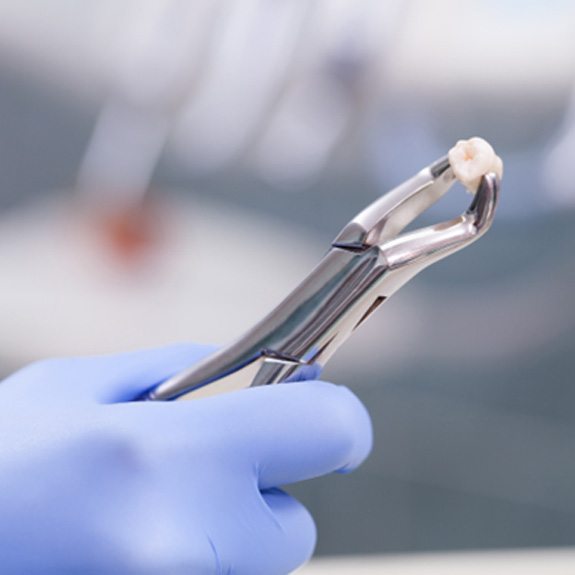
Teeth can be removed using one of two methods: simple extraction or surgical extraction. The kind of extraction performed in your case will depend on the state of the tooth in question. Here’s a brief look at both types of tooth removal:
- A simple extraction can be performed on teeth that have successfully erupted from beneath the gums and are currently visible in your mouth. To carry out a simple extraction, we will loosen the tooth with an instrument called a dental elevator. Then we will gently rock the tooth back and forth until it reaches the point where it can be taken out of the socket.
- A surgical extraction is needed when the tooth is trapped under the gums or has been unable to fully erupt. To get to the tooth, an incision will need to be made in the gums, and a small amount of bone tissue might need to be taken out. It may be necessary to remove the tooth in sections rather than all at once.
Tooth Extraction Aftercare

To make sure there aren’t any problems while your mouth is recovering from a tooth extraction, be sure to:
- Avoid doing anything that could dislodge the protective blood clot that has formed at the surgical site; this includes smoking, using a straw, or spitting.
- Keep your head elevated whenever you lie down.
- Maintain a diet of soft foods such as scrambled eggs or mashed potatoes.
- Use over-the-counter medication to manage any discomfort that you might be experiencing.
Tooth Extractions FAQs
Does Getting a Tooth Extracted Hurt?
Before our team starts the process of removing your tooth, we will numb your mouth with a local anesthetic. As a result, you won’t have to worry about experiencing outright pain during the procedure, although you may notice some pressure.
After your tooth extraction in Reynoldsburg, you can typically expect some soreness, which will normally peak within the first two or three days. The discomfort will eventually subside on its own. Until then, you can keep yourself as comfortable as possible by taking over-the-counter pain medication or holding a cold compress over the affected area for 15-minute intervals.
Can I Leave the Space Empty After a Tooth Extraction?
You can choose not to replace a tooth after it has been removed, but this decision can have serious consequences for your oral health in the long run. A gap in your smile can cause your other teeth to drift out of position, leading to alignment issues. On top of that, a missing tooth can make it harder to chew your food as thoroughly as you need to, which can potentially contribute to digestive issues.
It’s generally in your best interest to have an extracted tooth replaced as soon as possible. This may mean getting a traditional dental bridge, a partial denture, or a dental implant topped with a dental crown. Our team can walk you through your options for replacing missing teeth and help you pick the one that’s right for your situation.
What Risks Are Involved with Tooth Extraction?
While tooth extraction is considered to be safe, it is not entirely risk-free. For instance, there’s a chance that an infection could occur at the extraction site while it’s still healing. An untreated infection could easily spread to other parts of the body, leading to further problems.
On top of that, you will need to be wary of dry socket. This is a condition that occurs when the blood clot that forms at the extraction site becomes dislodged. Not only can dry socket cause significant pain, but it can also interfere with the healing process.
Fortunately, you can minimize your risk for infection and dry socket after a tooth extraction simply by following the right aftercare steps. Our team will give you helpful instructions for taking care of your mouth while it’s healing so that you can avoid unnecessary complications.
How Should I Prepare for My Tooth Extraction?
Before you have a tooth removed, you should make sure that you fully understand what to expect from the procedure. We encourage you to let us know if you have any questions regarding your treatment and anything you might have to do to get ready ahead of time. On top of that, you should follow any instructions we give you; for example, we may tell you not to consume anything besides water on the morning of your appointment.
I Need a Checkup & Cleaning I am Worried About Gum Disease I Have a Cavity or Broken Tooth I am Missing One or More Teeth I Want to Enhance My Smile I Want a Straighter Smile I am Scared of the Dentist I Am in Pain & Need Help I Have Jaw Pain I'm Having Trouble Sleeping View Our Services